Skin & hair knowledge Library
Aging Questions, Answered.
Dermatologist-backed, straightforward answers to questions about skin aging, wrinkles, fine lines, collagen, retinoids, prevention, misconceptions and treatment options.
Visit our Aging or Dry Barrier pages for more.

How does Botox work?
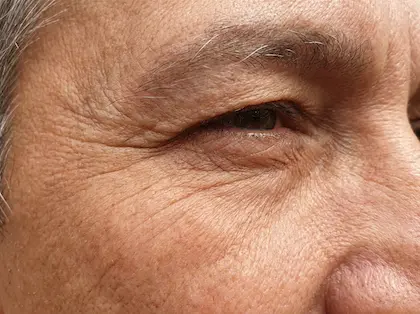
Botox works by blocking the release of acetylcholine at the nerve–muscle junction, temporarily relaxing injected muscles so dynamic wrinkles like frown lines, forehead lines and crow's feet soften. Botulinum toxin type A cleaves SNAP-25, a protein nerves need to signal the muscle, and because nerves gradually form new connections, results last about 3–4 months.
(AbbVie/Allergan, "Botox Cosmetic (onabotulinumtoxinA) Product Monograph," Health Canada.)
What should I avoid after Botox, including working out?
After Botox, avoid strenuous exercise, lying flat, rubbing or massaging the treated area and heat exposure such as saunas, hot yoga and hot tubs for at least 24 hours. These precautions reduce the small risk of the toxin spreading to nearby muscles, which can cause temporary eyelid or brow drooping (ptosis). Ask your injector whether to skip alcohol and blood-thinning supplements like fish oil for a day to minimize bruising, and avoid facials, microneedling or laser on the area for about two weeks. Normal facial expressions are fine and may even help the toxin bind.
(AbbVie/Allergan, "Botox Cosmetic (onabotulinumtoxinA) Product Monograph," Health Canada.)
How long after Botox can I lie down?
Most providers recommend staying upright for about 4 hours after Botox before lying down. This limits pressure on treated areas while the toxin binds to nerve endings, although evidence for the rule is limited, and sleeping on your back the first night is a cautious extra step.
(AbbVie/Allergan, "Botox Cosmetic (onabotulinumtoxinA) Product Monograph," Health Canada.)
How much does Botox cost in Vancouver?
Botox in Vancouver typically costs about $10–$15 per unit, so treatment usually runs about $200–$600 per area and up to roughly $1,000 for multiple areas. Price depends on the number of units, the injector's credentials (physician, nurse or dentist) and the clinic. Frown lines usually need around 20 units, forehead lines 10–20 units and crow's feet about 24 units for both sides. Prices far below market can signal over-diluted product or less-experienced injectors.
(AbbVie/Allergan, "Botox Cosmetic (onabotulinumtoxinA) Product Monograph," Health Canada.)
How many units of Botox do I need?
Most people need about 20 units for frown lines (glabellar lines), 24 units for crow's feet (12 per side) and 10–20 units for forehead lines, so a full upper face typically uses 40–64 units. These figures reflect approved label doses, but injectors adjust for muscle strength, sex and the look you want, and men often need more. First-time patients may start lower and add a touch-up at two weeks. A lip flip usually uses only 4–6 units.
(AbbVie/Allergan, "Botox Cosmetic (onabotulinumtoxinA) Product Monograph," Health Canada.)
How long does Botox last, and how long does it take to work?
Botox typically lasts 3–4 months and starts working within 3–5 days, with full results at about 2 weeks. Effects fade as nerves form new connections to the muscle, and some people see results last 4–6 months, especially after repeated treatments. Some highly active people report shorter duration, though evidence is limited, and higher doses can last longer. A two-week review lets your injector fine-tune, and treatments every 3–4 months maintain results.
(AbbVie/Allergan, "Botox Cosmetic (onabotulinumtoxinA) Product Monograph," Health Canada.)
How much does microneedling cost in Vancouver?
Microneedling in Vancouver typically costs about $250–$450 per session for standard microneedling and $600–$1,200 or more for RF (radiofrequency) microneedling. Most people need a series of 3–6 sessions spaced 4–6 weeks apart, so clinics often offer packages. Add-ons such as exosomes or growth factor serums increase the price but can boost results. TVA prices every session within one of four set intensity tiers, so clients see their full program cost upfront rather than navigating device-by-device pricing.
Is microneedling worth it?
Yes, microneedling is worth it for acne scars, enlarged pores, fine lines and uneven texture, with most people seeing measurable improvement after 3–6 sessions. Controlled micro-injuries trigger growth factor release and new collagen and elastin over 3–6 months with minimal downtime and low pigmentation risk for all skin tones, though it is less effective for deep wrinkles or significant sagging.
(Dermatologic Surgery, "Microneedling: A Review and Practical Guide," 2018.)
Does microneedling hurt?
Microneedling usually causes only mild discomfort, often described as light scratching or vibration, because numbing cream is applied 20–45 minutes beforehand. Deeper settings over bony areas like the forehead and upper lip feel more intense, and skin stays red and slightly sensitive for 24–72 hours afterward.
(Dermatologic Surgery, "Microneedling: A Review and Practical Guide," 2018.)
Does using anti-aging creams early in your 20s make skin age faster later?
No, using anti-aging skincare in your 20s does not make skin age faster later. Daily sunscreen is the most proven prevention—a randomized trial found daily users showed no detectable increase in skin aging over 4.5 years—and retinoids don't thin the dermis or exhaust collagen; they increase it.
Is skin aging entirely dictated by genetics rather than lifestyle factors?
No, skin aging is not entirely genetic—up to 80% of visible facial aging in sun-exposed skin is attributed to UV exposure, and smoking, pollution, sleep and diet also play major roles. Studies of identical twins show the twin with more sun exposure, smoking or weight changes looks noticeably older, proving lifestyle shapes how genes are expressed.
(Clinical, Cosmetic and Investigational Dermatology, "Effect of the sun on visible clinical signs of aging in Caucasian skin," 2013.)
Do expensive luxury anti-aging serums work better than drugstore formulas?
No, expensive luxury serums do not reliably work better than drugstore formulas, because results depend on proven actives, concentration, stability and consistent use rather than price. Retinoids, vitamin C, niacinamide, peptides and sunscreen have the strongest evidence at every price point, though medical-grade products often offer higher concentrations or better delivery, and TVA's library of 700+ products from 25 medical-grade brands lets plans be matched to skin needs rather than price tags.
Can drinking a gallon of water a day completely eliminate fine lines and wrinkles?
No, drinking a gallon (about 3.8 litres) of water a day will not eliminate fine lines and wrinkles. Extra water can modestly improve skin hydration in people who normally drink little, but wrinkles come from collagen loss, UV damage and repeated muscle movement that water can't reverse.
(Clinical, Cosmetic and Investigational Dermatology, "Dietary water affects human skin hydration and biomechanics," 2015.)
Is it true that oily skin types do not age or develop wrinkles?
No, oily skin does age and develop wrinkles, although it may show some fine lines a little later. Sebum helps protect the barrier and keeps skin looking supple, but collagen loss, sun damage and sagging affect every skin type.
Is it true that oily skin types do not age or develop wrinkles?
No, oily skin does age and develop wrinkles, although it may show some fine lines a little later. Sebum helps protect the barrier and keeps skin looking supple, but collagen loss, sun damage and sagging affect every skin type.
How does the rate of epidermal cell turnover slow down as skin ages chronologically?
Epidermal cell turnover slows by roughly 30–50% between early adulthood and older age, from about 28 days in young skin to well over a month later in life. Basal keratinocyte division and stem-cell activity decline, so dead cells linger and cause dullness, uneven tone and slower healing, which is why turnover-boosting retinoids and exfoliating acids are core anti-aging treatments.
(Journal of Gerontology, "Age-associated changes in human epidermal cell renewal," 1983.)
How do high-altitude UV levels at BC ski resorts accelerate photoaging compared to sea-level exposure?
High-altitude UV at BC ski resorts accelerates photoaging because UV intensity rises about 10% with every 1,000 m of elevation, and fresh snow reflects up to 80% of UV back onto the face. Alpine terrain at resorts like Whistler Blackcomb sits above 2,000 m, so skiers can receive far more UV than at sea level in Vancouver, even on cold, cloudy days, making broad-spectrum SPF 50, reapplication every two hours and UV-blocking goggles essential.
(World Health Organization, "Radiation: The ultraviolet (UV) index," 2022.)
How does long-term psychological stress affect cortisol levels and accelerate visible signs of skin aging?
Long-term stress accelerates visible aging because chronically high cortisol breaks down collagen, impairs barrier lipid production and slows wound healing. Stress also raises oxidative stress and inflammatory signalling, and combined with poor sleep it leads to thinner, duller skin and more pronounced lines over time.
(Inflammation & Allergy—Drug Targets, "Brain-skin connection: stress, inflammation and skin aging," 2014.)
What are the most effective ways to adapt your daily lifestyle to protect aging skin from environmental pollution?
The most effective protections are thorough evening cleansing to remove particulate matter, a morning antioxidant serum such as vitamin C, daily broad-spectrum SPF and avoiding outdoor workouts near heavy traffic or during wildfire smoke. Airborne particles generate oxidative stress and are linked to more pigment spots and wrinkles, so checking BC's Air Quality Health Index (AQHI) on smoky summer days is worthwhile.
(Journal of Investigative Dermatology, "Airborne particle exposure and extrinsic skin aging," 2010.)
How does sleeping on your side or stomach physically contribute to the formation of permanent sleep wrinkles?
Sleeping on your side or stomach creates sleep wrinkles because the face is compressed, sheared and distorted against the pillow for hours every night. Unlike expression lines, sleep lines often run perpendicular to them and become permanent as elasticity declines, so back-sleeping or a silk pillowcase or contoured pillow reduces this mechanical stress.
(Aesthetic Surgery Journal, "Facial Sleep Wrinkles: Etiology and Prevention," 2016.)
What lifestyle modifications best support skin elasticity and density during the hormonal shifts of menopause?
The best supports during menopause are daily SPF, strength training, adequate protein, not smoking, good sleep and a topical retinoid with a rich ceramide moisturizer, since falling estrogen speeds collagen loss. Skin loses about 30% of its collagen in the first five years after menopause, and menopausal hormone therapy, discussed with a physician, can also help maintain skin thickness.
(Maturitas, "Hormone replacement therapy and the skin," 2000.)
How does a diet high in refined sugars and processed foods impact the skin's natural collagen preservation?
A diet high in refined sugar and processed foods accelerates collagen damage through glycation, in which excess glucose binds to collagen and elastin and forms stiff advanced glycation end-products (AGEs). AGEs reduce elasticity and impair repair while high-glycemic diets raise inflammation, so diets rich in vegetables, healthy fats and antioxidants are associated with fewer wrinkles.
What are the best daily habits to maintain skin barrier health and prevent chronic dryness in aging skin?
The best daily habits are cleansing with lukewarm water and a gentle non-foaming cleanser, applying a moisturizer with ceramides, cholesterol and fatty acids to damp skin, wearing SPF daily and avoiding over-exfoliation. Aging skin makes fewer barrier lipids and less natural moisturizing factor, so a winter humidifier and shorter, cooler showers also help prevent chronic dryness.
(Journal of Cosmetic Dermatology, "The science behind skin care: Moisturizers," 2018.)
How do Vancouver's damp, windy winters affect transepidermal water loss and fine lines in mature skin?
Vancouver's damp, windy winters increase transepidermal water loss (TEWL) because cold wind and dry indoor heating pull moisture from the skin, despite the high outdoor humidity. Dehydration makes fine lines look deeper in mature skin, so switching to a richer, occlusive moisturizer and running a humidifier during the heating season helps.
(Journal of the European Academy of Dermatology and Venereology, "The effect of environmental humidity and temperature on skin barrier function and dermatitis," 2016.)
What are the most effective lifestyle changes for reducing sagging skin around the neck and jawline without surgery?
The most effective lifestyle changes are daily SPF on the neck and chest, not smoking, keeping a stable weight, eating enough protein, strength training and using a retinoid on the neck, since UV and collagen loss drive most laxity. Lifestyle changes slow sagging but can't fully reverse it, so collagen-stimulating treatments such as microneedling and laser are often added, and TVA's clinical, non-surgical protocols are designed for exactly this concern.
How do you transition a daily skincare routine from early anti-aging prevention to mature skin maintenance?
Transition by keeping the core—daily SPF, an antioxidant and a retinoid—while increasing retinoid strength, adding richer barrier-repair moisturizers and incorporating peptides or growth factors as skin becomes drier and thinner. Routines in your 20s and 30s focus on preventing UV damage, while from your 40s onward, perimenopausal changes and slower cell turnover call for more collagen support and professional treatments such as microneedling or laser.
(Clinical Interventions in Aging, "Retinoids in the treatment of skin aging: an overview of clinical efficacy and safety," 2006.)
How does vitamin C (L-ascorbic acid) act as a cofactor in collagen synthesis while neutralizing free radicals?
Vitamin C (L-ascorbic acid) is an essential cofactor for prolyl and lysyl hydroxylase, the enzymes that stabilize collagen's triple-helix structure, and it also boosts collagen gene expression. As a water-soluble antioxidant, it donates electrons to neutralize UV-generated free radicals and regenerates vitamin E, with topical formulas working best at 10–20% and a pH below 3.5.
(Nutrients, "The Roles of Vitamin C in Skin Health," 2017.)
What are the clinical differences between alpha hydroxy acids (AHAs) and polyhydroxy acids (PHAs) for mature skin?
Alpha hydroxy acids (AHAs) such as glycolic and lactic acid are small molecules that penetrate deeper and exfoliate faster, while polyhydroxy acids (PHAs) such as gluconolactone and lactobionic acid are larger, penetrate slowly and sting far less. PHAs also act as humectants and antioxidants that support the barrier, making them a gentler daily option for mature or sensitive skin, while AHAs deliver stronger results for sun damage and texture.
(Cutis, "The use of polyhydroxy acids (PHAs) in photoaged skin," 2004.)
How do topical ceramides and fatty acids work together to repair an aging skin barrier?
Topical ceramides, cholesterol and free fatty acids repair an aging barrier by replenishing the lipid layers between skin cells that control water loss. Aging skin produces fewer of these lipids, and research shows that applying all three in a physiological ratio speeds barrier recovery more than ceramides alone.
(Journal of Investigative Dermatology, "Optimization of physiological lipid mixtures for barrier repair," 1996.)
Why is prescription-strength hydroquinone limited to short-term cycles when treating age spots and melasma?
Prescription hydroquinone is limited to short cycles—typically 3–4 months followed by a break—because long-term continuous use can cause exogenous ochronosis (paradoxical blue-black darkening), irritation and rebound pigmentation. Hydroquinone inhibits tyrosinase and is toxic to melanocytes, so cycling with non-hydroquinone maintenance agents like azelaic acid, tranexamic acid or retinoids preserves results, and in Canada concentrations above 2% require a prescription.
(Journal of the European Academy of Dermatology and Venereology, "The safety of hydroquinone," 2006.)
What are the top-rated clinics in Vancouver for microneedling versus laser?
The top-rated Vancouver clinics choose between microneedling and laser based on your concern—microneedling for acne scars, texture and darker skin tones, and laser for sun damage, pigmentation and fine lines—rather than selling a single device. The Vancouver Aesthetician (TVA) combines microneedling, laser, exosomes and chemical peels in layered, concern-based protocols and holds perfect 5.0-star ratings across major review platforms, and whichever clinic you choose, ask about practitioner training, device type and before-and-after photos in your skin tone.
How does the peptide acetyl hexapeptide-8 (Argireline) compare to cosmetic Botox injections?
Argireline (acetyl hexapeptide-8) is far weaker than Botox: it modestly softens expression lines, while Botox injections reliably relax the muscle for 3–4 months. Argireline mimics part of the SNAP-25 protein to slightly reduce acetylcholine release, but its limited skin penetration means studies show only modest reductions in wrinkle depth after weeks of twice-daily use.
Can you mix a growth factor serum with a microencapsulated retinol in the same nighttime skincare routine?
Yes, you can generally layer a growth factor serum with a microencapsulated retinol in the same night routine. Microencapsulation releases retinol gradually to reduce irritation, and growth factors such as EGF and TGF-β support fibroblast activity without chemically clashing with retinoids, so apply the thinner serum first, then the retinol, and buffer with moisturizer if your skin is sensitive.
Can a face yoga or facial massage routine permanently reverse sagging skin?
No, face yoga or facial massage cannot permanently reverse sagging skin. A small 2018 study found 20 weeks of daily facial exercise modestly improved cheek fullness in middle-aged women, but the effect depends on continued practice and does nothing for collagen loss, sun damage or ligament laxity.
Does Vancouver's high cloud cover eliminate the need for daily anti-aging sunscreen?
No, Vancouver's high cloud cover does not eliminate the need for daily sunscreen. Up to 80% of UV can pass through light cloud, and UVA—the main driver of photoaging—penetrates clouds and windows and stays fairly constant year-round, so daily broad-spectrum SPF 30+ is recommended even on grey days.
Is topical collagen actually able to penetrate the dermis to rebuild skin structure?
No, topical collagen cannot penetrate the dermis to rebuild skin structure, because collagen molecules are around 300,000 daltons—far above the roughly 500-dalton limit for skin penetration. Topical collagen acts as a surface humectant that temporarily hydrates and plumps, so increasing real dermal collagen requires retinoids, vitamin C, peptides or collagen-stimulating treatments like microneedling.
(Experimental Dermatology, "The 500 Dalton rule for the skin penetration of chemical compounds and drugs," 2000.)
How does the depletion of type I and type III collagen structurally alter the dermal matrix during skin aging?
Loss of type I and type III collagen thins and weakens the dermis, because type I provides tensile strength and type III supports elasticity and the fine fibre network. With age and UV exposure, fibroblasts make less procollagen while matrix metalloproteinases fragment existing fibres, and fragmented collagen reduces the mechanical tension fibroblasts need to stay productive, creating a self-perpetuating cycle of wrinkles and laxity.
(American Journal of Pathology, "Collagen fragmentation promotes oxidative stress and elevates matrix metalloproteinase-1 in fibroblasts in aged human skin," 2009.)
What is the cellular mechanism behind advanced glycation end-products (AGEs) hardening collagen and elastin fibres?
Advanced glycation end-products (AGEs) harden collagen and elastin when sugars such as glucose and fructose bind non-enzymatically to their amino acids (the Maillard reaction), forming irreversible cross-links such as pentosidine and glucosepane. Cross-linked fibres become stiff, brittle and resistant to normal turnover, while AGEs also bind the RAGE receptor to trigger oxidative stress and inflammation that accelerate sagging and wrinkles.
How does ultraviolet radiation trigger matrix metalloproteinases (MMPs) to degrade the skin's extracellular matrix?
Ultraviolet radiation generates reactive oxygen species that activate MAP kinase signalling and the transcription factor AP-1, which switches on matrix metalloproteinases such as MMP-1, MMP-3 and MMP-9. These enzymes degrade collagen and elastin in the extracellular matrix, while AP-1 also suppresses new collagen production—an effect that topical retinoids partly counteract.
What role do senescent "zombie" cells play in spreading chronic inflammation to surrounding healthy skin tissue?
Senescent 'zombie' cells spread inflammation by secreting a mix of cytokines, chemokines and enzymes called the senescence-associated secretory phenotype (SASP), including IL-6, IL-8 and matrix metalloproteinases. These signals degrade collagen and can push neighbouring fibroblasts and melanocytes into senescence, which is why senolytic and senomorphic ingredients are an emerging area of anti-aging research.
(Mechanisms of Ageing and Development, "Faces of cellular senescence in skin aging," 2021.)
What causes the structural flattening of the dermal-epidermal junction, and how does it lead to skin fragility?
The dermal-epidermal junction (DEJ) flattens with age because rete ridges—finger-like projections that interlock the epidermis and dermis—retract as basement membrane proteins such as collagen IV, collagen VII and laminin decline. A flatter junction has less contact area, so the layers separate more easily under friction, nutrient exchange drops and skin tears and bruises more readily.
(Mechanisms of Ageing and Development, "The impact of intrinsic ageing on the protein composition of the dermal-epidermal junction," 2016.)
Does chronic exposure to blue light from digital screens induce oxidative stress and skin aging the same way UVA rays do?
No, blue light from digital screens does not age skin the way UVA does, because screens emit only a tiny fraction of the high-energy visible light in sunlight. Solar visible light can generate reactive oxygen species and collagen-degrading enzymes and can trigger pigmentation in deeper skin tones, but screen exposure is far too low to cause meaningful photoaging, so tinted sunscreens with iron oxides matter more outdoors than indoors.
(Journal of Investigative Dermatology, "Irradiation of skin with visible light induces reactive oxygen species and matrix-degrading enzymes," 2012.)
How does tretinoin compare to tazarotene for reversing photoaging and stimulating collagen production?
Tazarotene 0.1% is slightly more potent than tretinoin for reversing photoaging but is usually more irritating. Tretinoin binds all three retinoic acid receptors (RAR-α, -β and -γ) while tazarotene selectively targets RAR-β and RAR-γ, and in a head-to-head trial tazarotene 0.1% cream improved fine wrinkling and mottled pigmentation at least as well as tretinoin 0.05%, with both stimulating new type I and III collagen.
(Journal of Cosmetic and Laser Therapy, "Tazarotene 0.1% cream versus tretinoin 0.05% emollient cream in the treatment of photodamaged facial skin," 2004.)
What is the chemical mechanism that makes copper peptides effective for wound healing and skin remodelling?
Copper peptides (GHK-Cu) aid wound healing by delivering copper to lysyl oxidase, the enzyme that cross-links new collagen and elastin, and by signalling fibroblasts to produce more collagen and glycosaminoglycans. GHK-Cu also balances matrix metalloproteinases and their inhibitors (TIMPs), attracts immune and blood-vessel cells and has antioxidant activity, supporting both removal of damaged tissue and rebuilding.
(International Journal of Molecular Sciences, "Regenerative and Protective Actions of the GHK-Cu Peptide in the Light of the New Gene Data," 2018.)
What is the molecular difference in how autologous platelet-rich plasma (PRP) activates dermal fibroblasts versus synthetic exosomes?
Platelet-rich plasma (PRP) activates dermal fibroblasts through growth factors released from your own platelets—such as PDGF, TGF-β, VEGF and EGF—that bind receptors on the cell surface and stimulate proliferation and collagen production. Lab-produced exosomes are nano-sized vesicles (typically derived from cultured stem cells or plants rather than truly synthetic) that carry microRNAs, proteins and lipids into fibroblasts and reprogram gene expression from inside the cell, offering more standardized signalling regardless of a patient's age or health, though with less long-term data.
Can preventative Botox in your early 20s cause facial muscle atrophy over time?
Yes, repeated Botox over many years can cause some thinning (atrophy) of the treated muscles, but it is usually subtle, partly reversible when treatments stop and often part of the intended softening effect. Starting in your early 20s is best done with conservative doses that preserve natural movement and avoid neighbouring muscles compensating, which can create new lines.