Skin & hair knowledge Library
Skin Questions, Answered.
Clear, research-backed answers to biggest questions about skin and hair.

Acne mis QA25 Copy 2 Copy
Acne mis QA25
Acne mis QA25 Copy 2 Copy
Acne mis QA25
Acne treat QA2 Copy 2 Copy
Acne treat QA2
Acne treat QA2 Copy 2 Copy
Acne treat QA2
acne Q2 Copy 2 Copy
acne live
acne Q2 Copy 2 Copy
acne live
acne Q1 Copy 2 Copy
A1 acne bio
acne Q1 Copy 2 Copy
A1 acne bio
acne Why do pores become clogged in the first place? Copy 2 Copy
acne bio Pores clog because skin cells lining the follicle shed abnormally, stick together and mix with sebum to form a plug instead of exiting the pore. This process, called follicular hyperkeratinization, is driven by androgens, low linoleic acid in sebum and interleukin-1α signalling, which is why retinoids that normalize cell turnover are first-line acne treatments.
acne Why do pores become clogged in the first place? Copy 2 Copy
acne bio Pores clog because skin cells lining the follicle shed abnormally, stick together and mix with sebum to form a plug instead of exiting the pore. This process, called follicular hyperkeratinization, is driven by androgens, low linoleic acid in sebum and interleukin-1α signalling, which is why retinoids that normalize cell turnover are first-line acne treatments.
acne What actually causes acne, and how does a pimple form? Copy 2 Copy
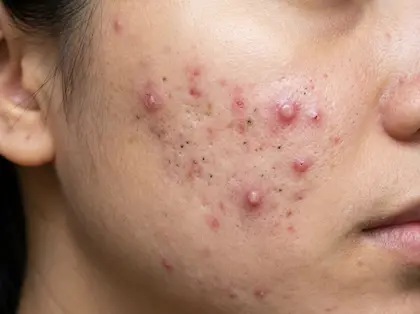
acne bio Acne forms when excess sebum, dead skin cells and Cutibacterium acnes bacteria block a hair follicle and trigger inflammation. The clogged follicle (microcomedo) grows into a visible comedo, then becomes an inflamed papule or pustule once the immune system reacts to trapped bacteria and lipids.[1]
acne What actually causes acne, and how does a pimple form? Copy 2 Copy
acne bio Acne forms when excess sebum, dead skin cells and Cutibacterium acnes bacteria block a hair follicle and trigger inflammation. The clogged follicle (microcomedo) grows into a visible comedo, then becomes an inflamed papule or pustule once the immune system reacts to trapped bacteria and lipids.[1]