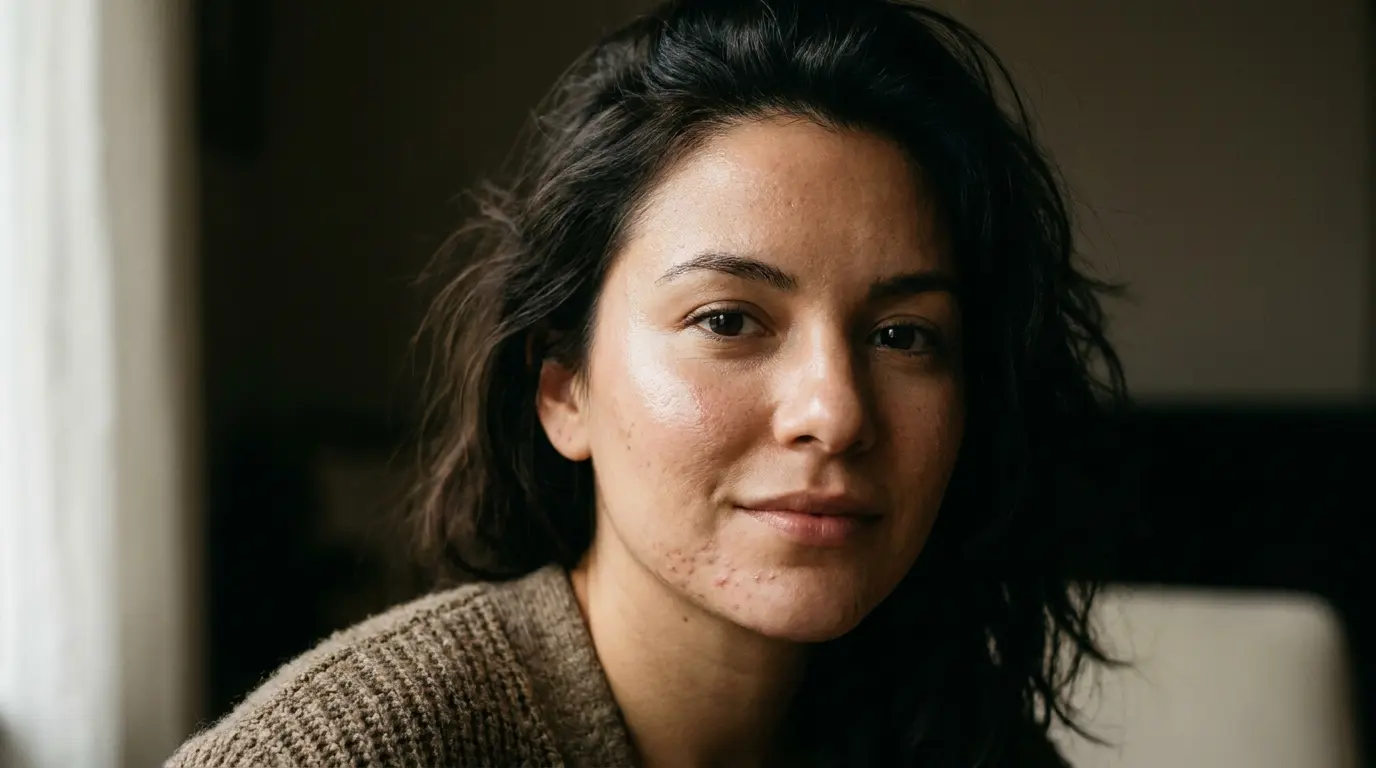
We have all heard the promises. Toothpaste overnight. Lemon juice in the morning. A cinnamon mask your cousin swears by. But what if the things you have been putting on your face are the reason your breakouts keep coming back, and the reason some of them are turning into scars?
This guide is about three things: why hormonal acne behaves the way it does, how a pimple quietly becomes a permanent scar, and which home remedies deserve a one-way trip to the bin. Over the past two years, our team at The Vancouver Aesthetician has assessed hundreds of acne-prone faces, and the same seven mistakes show up again and again. This is the six minute read that condenses all of it.
If your bathroom shelf is part science experiment, part pantry, keep reading. Your skin will thank you.
Why Your Acne Keeps Coming Back (It's Not Your Pillowcase)
Acne is the most common skin condition in North America. The American Academy of Dermatology reports that it affects up to 50 million Americans every year, and roughly 85 percent of people between 12 and 24 will deal with it at some point. Canada is no different.
So why does it feel so personal? Because acne is never just one thing. Four forces have to line up for a breakout to happen:
Excess oil production, usually driven by hormones called androgens
Sticky dead skin cells that clog the pore instead of shedding cleanly
C. acnes bacteria multiplying inside that clogged, oxygen-poor pore
Inflammation, your immune system arriving at the scene with sirens on
Pop a single pimple and you have addressed exactly none of these. That is why squeezing feels productive and changes nothing. The pipeline that created the breakout is still running.
Hormonal Acne: The Jawline Pattern
Now, here is where it gets specific. If your breakouts cluster along the jawline, chin, and lower cheeks, flare like clockwork seven to ten days before your period, and laugh at every cleanser you have tried, you are likely dealing with hormonal acne.
Clinical literature, including the widely cited Acne Vulgaris review in the NIH StatPearls library, describes how androgen fluctuations ramp up sebum production at the pore level. This is why hormonal acne is so common in adult women in their twenties, thirties, and forties, long after teenage acne was supposed to retire. And no, men are not exempt. Testosterone-driven breakouts, beard-area congestion, and post-shave inflammation are some of the most frequent concerns we treat in men's skin programs.
The kicker? Hormonal acne forms deep. These are tender, cystic bumps under the skin, which means surface scrubs cannot reach them, and picking at them is essentially digging a hole into living tissue. Which brings us to the part everyone underestimates.
How a Pimple Becomes a Scar
Here is the crazy thing about it: a scar is not damage. A scar is a repair job done in a hurry.
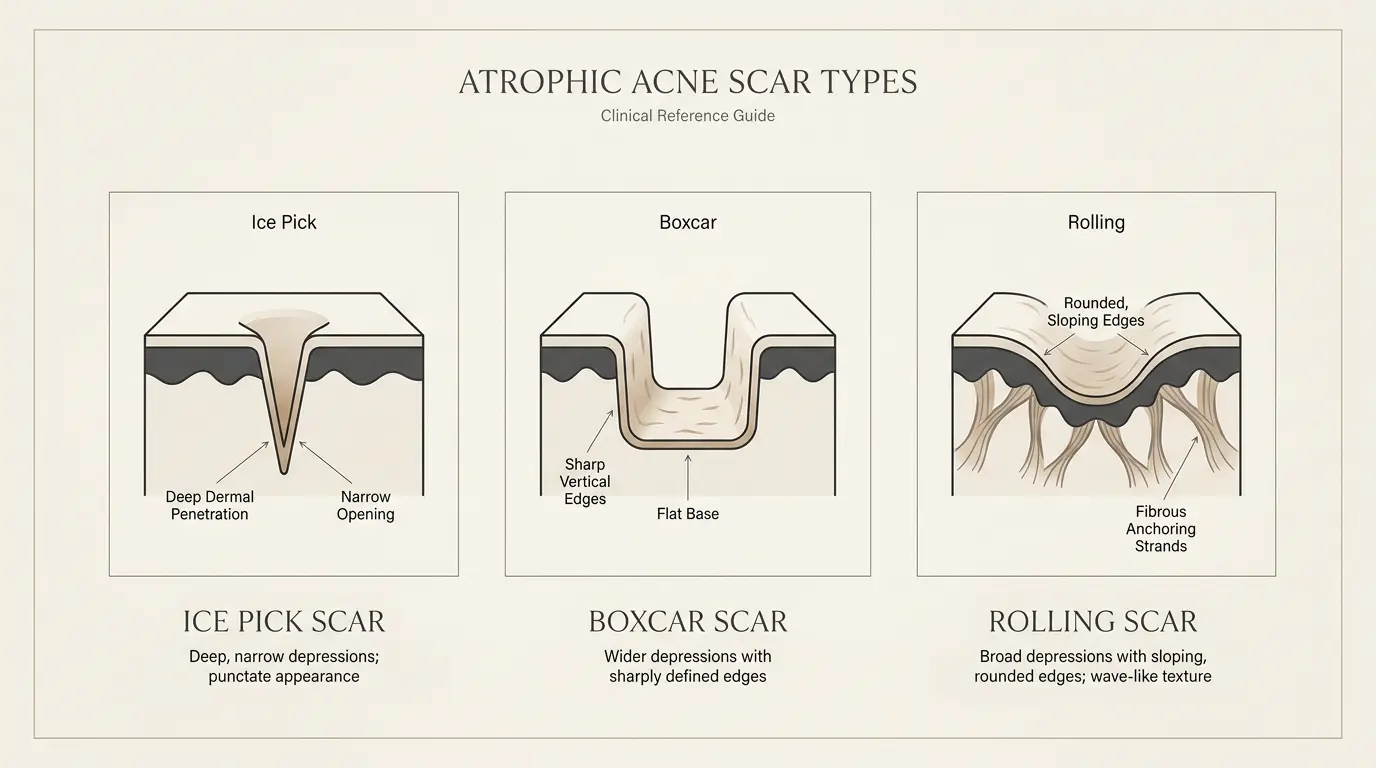
When a deep, inflamed blemish ruptures, your skin floods the area with collagen to patch the wound. If inflammation burns hot for too long, the repair goes wrong in one of two directions. Too little collagen leaves a dent. Too much leaves a raised bump. Dermatologists sort the dents, called atrophic scars, into three families:
Ice pick scars: narrow, deep punctures, like the skin was poked with a needle
Boxcar scars: wider depressions with sharp, defined edges
Rolling scars: soft, wave-like dips caused by fibrous bands pulling the skin down from underneath
There is also a fourth souvenir that is technically not a scar at all: the flat brown or red mark that lingers for months after a breakout heals. That is post-inflammatory hyperpigmentation, and in skin that flushes easily it often overlaps with persistent redness. Different problem, different treatment, and one of the most common things people mistake for scarring.
So what decides whether you scar? Mostly two things: how long the inflammation lasts, and how much trauma the spot endures. Every squeeze, every harsh DIY acid, every gritty scrub extends that inflammation. Which is exactly why the next section matters so much.
The 7 Home Remedies That Never Worked (And What They Actually Cost You)
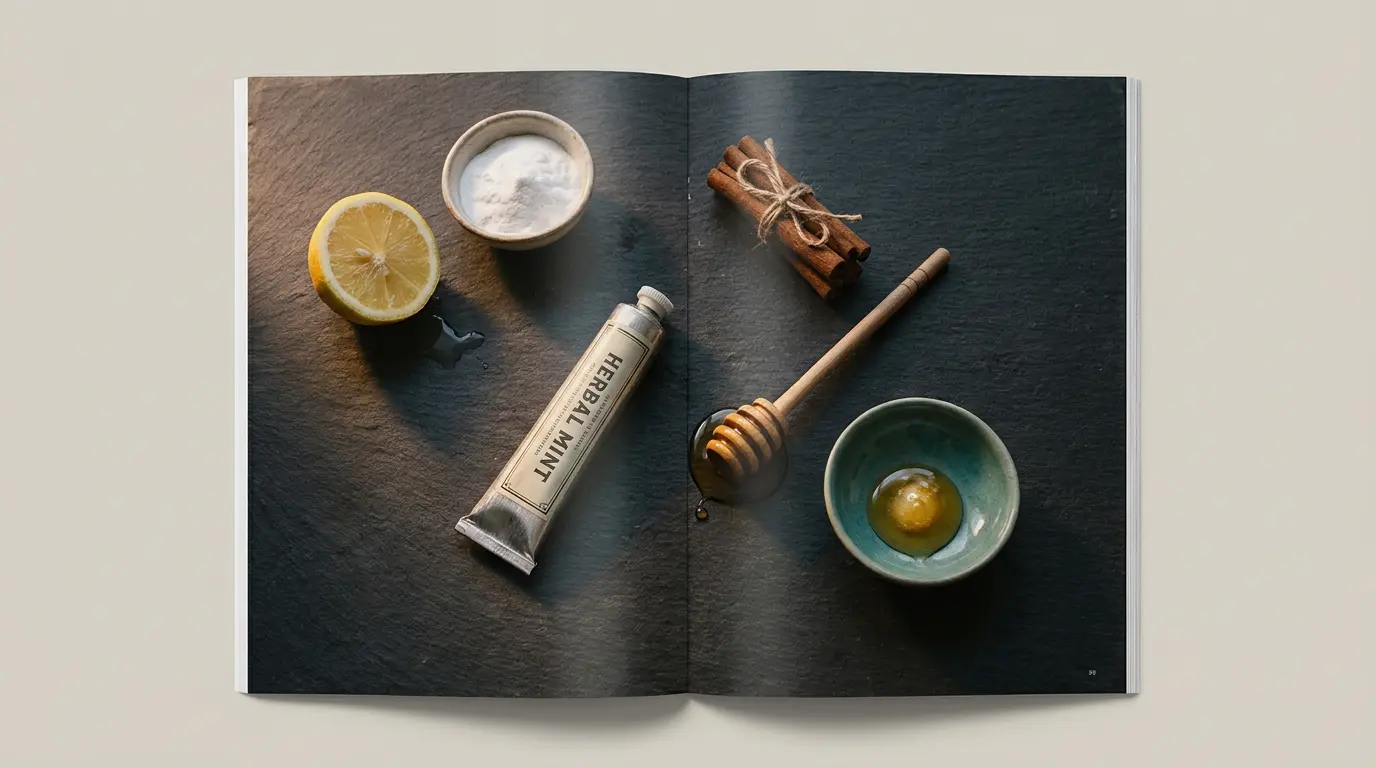
Let me tell you about Maya. She came to see us last spring, 29 years old, marketing director, sharp as they come. For eight months she had been dabbing toothpaste on her chin every night and wiping her face with lemon juice every morning, because a video with four million views told her to. By the time she sat in our chair, her hormonal breakouts were unchanged. What had changed was everything around them: a stinging, compromised skin barrier and a constellation of dark patches across her chin where the lemon juice had triggered pigment in the sun. She was not treating acne anymore. She was manufacturing discolouration.
Maya is not an outlier. She is the pattern. Here are the seven remedies we see most, and why they fail:
Toothpaste. Contains menthol, peroxides, and detergents designed for enamel, not skin. It dries the surface, irritates the pore, and prolongs inflammation. Remember what prolonged inflammation creates? Scars.
Lemon juice. Highly acidic, wildly inconsistent pH, and phototoxic. Combined with sunlight it can cause burns and stubborn pigmentation that takes far longer to fade than the pimple ever would have.
Baking soda. Alkaline, the exact opposite of your skin's natural acidity. It strips the barrier, and a stripped barrier produces more oil, not less.
Cinnamon and honey masks. Honey is harmless. Cinnamon is a common contact allergen that can leave skin red and reactive for days.
Rubbing alcohol or witch hazel toners. That tight, squeaky feeling is not "clean." It is barrier damage, which triggers rebound oiliness within 48 hours.
Sudocrem, diaper creams, and random ointments. Occlusive pastes can trap bacteria inside the pore. You are tucking the problem in for the night.
DIY pore vacuums and at-home extractions. Uncontrolled suction and squeezing push debris deeper and rupture pore walls sideways, under the skin. This is the express lane to rolling scars.
Notice the theme? Every single one attacks the surface while the actual machinery of acne, oil, hormones, bacteria, and inflammation, keeps humming away underneath. Worse, most of them add trauma, and trauma is the raw ingredient of scarring.
On the other hand, this is genuinely good news. If home remedies were failing you, it was never because your skin is broken. It is because the tools were wrong.
What Actually Works: Layered Treatment, Not Single Tricks
Here is the principle that separates clinical results from bathroom-shelf gambling: acne has four drivers, so effective treatment has to hit several of them at once, in the right order, at the right intensity. One ingredient cannot do that. One device cannot do that. A layered protocol can.
For Active and Hormonal Acne
Calming the breakout cycle starts with decongesting and regulating. Professional chemical peels using salicylic and mandelic acids dissolve the sticky plug inside the pore at a controlled, measured depth, something lemon juice could never dream of. A deep-cleansing HydraFacial flushes congestion without the trauma of manual squeezing. Blue and red LED therapy targets C. acnes bacteria and dials down inflammation with zero downtime, while medical-grade anti-inflammatory ingredients like azelaic acid and niacinamide keep the skin calm between sessions.
For hormonal patterns specifically, consistency beats intensity. The deep, cyclical nature of these breakouts means your protocol needs to adapt month to month, which is why we track progress and adjust the layering at every visit rather than repeating the same recipe forever.
For Acne Scars and Lingering Marks
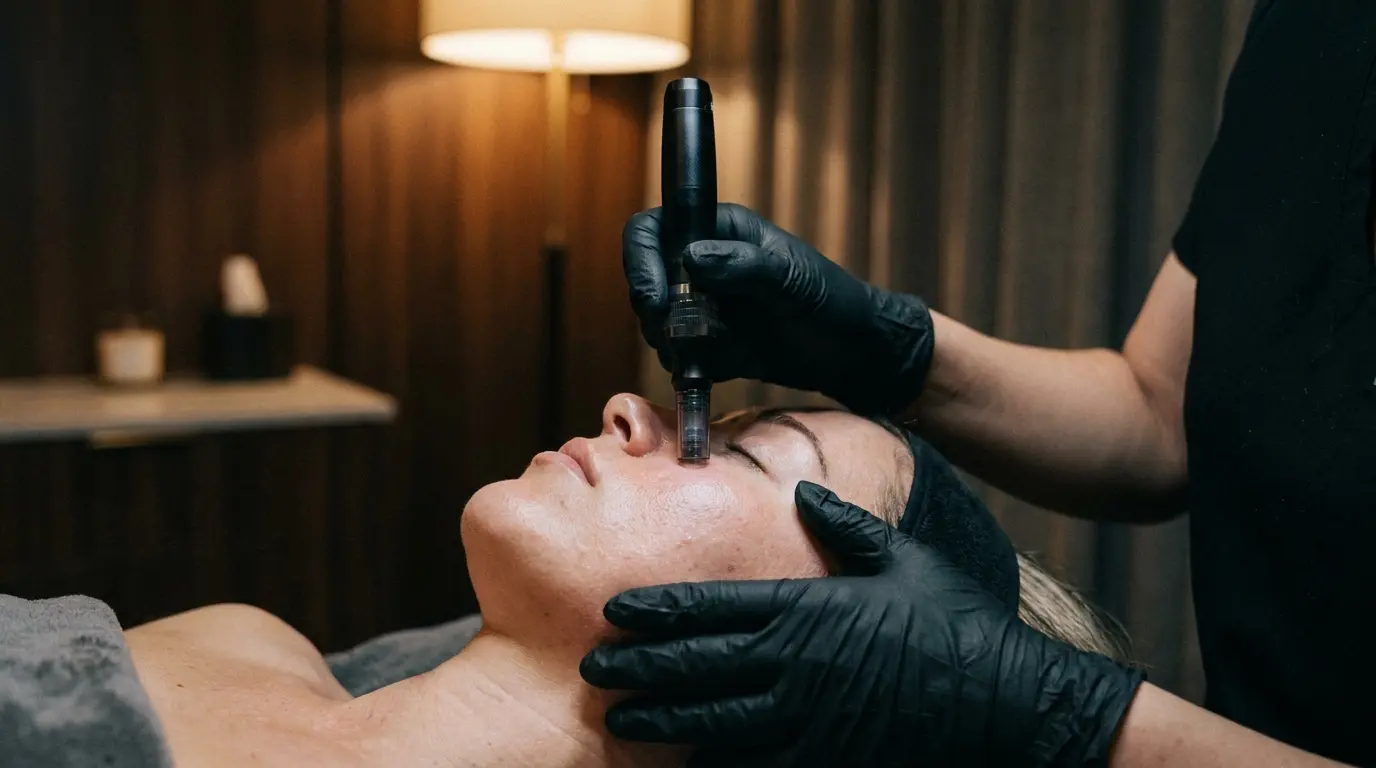
Once active breakouts are controlled, remodelling begins. Microneedling creates thousands of precise micro-channels that trigger fresh, organized collagen, and peer-reviewed studies consistently report meaningful improvement in atrophic scar depth across a series of three to six sessions, with many trials documenting visible change in the 50 to 70 percent range. Pairing those channels with exosomes and PDRN or topical growth factors supercharges the repair signal, telling fibroblasts not just to build collagen, but to build it well.
For sharper-edged boxcar scars and textural irregularity, laser resurfacing remains the gold standard, resurfacing the scar's edges so light stops catching in the depression. And those flat brown souvenirs Maya collected? Targeted brightening protocols fade post-acne scarring and pigmentation far faster than the 12 to 24 months they can take to resolve on their own.
Maya, for the record, ran a layered program of peels, LED, and microneedling with exosomes. Five months later she texted us a bare-faced photo from a work retreat in Whistler with one line: "Forgot concealer. Did not care." That is the entire goal, in seven words.
Your Next 72 Hours: A Simple Plan
Want to start tonight, before any appointment? Do this:
Retire the pantry. Lemon, toothpaste, baking soda, cinnamon. All of it, gone.
Simplify to three steps. Gentle cleanser, a barrier-supportive moisturizer, and broad-spectrum SPF every single morning.
Adopt a strict hands-off policy. Every squeeze you skip is a scar you may never have to treat.
Photograph your skin in natural light. Progress tracking changes decisions, and you will want a true baseline.
Get a professional assessment. Hormonal acne, congestion, and scarring each need a different map, and guessing is expensive.
If you are ready for that last step, you can book a consultation at The Vancouver Aesthetician and we will build your layered program together, adjusting it as your skin evolves.
The Bottom Line
Acne is a four-part problem, hormonal acne is its most persistent form, and scars are simply inflammation that overstayed its welcome. Home remedies fail because they attack the surface, add trauma, and ignore the machinery underneath. Layered, progress-tracked clinical treatment works because it does the opposite.
We hope you found this valuable. Our team spent a great deal of time researching, fact-checking, and condensing these insights so you do not have to learn them the hard way, the way Maya did. If it helped you, sharing it with one friend who is still sleeping in toothpaste would mean the world to us. Their chin will thank you too.
Sources: American Academy of Dermatology; NIH National Library of Medicine (StatPearls, Acne Vulgaris); MedlinePlus, Acne overview.