
Here is something nobody warns men about. You coast. For years your skin looks fine while everyone around you frets over serums and creams. Then one ordinary Tuesday you catch your reflection in an elevator, and a tired, slightly heavier, slightly older stranger looks back at you. We have studied this pattern across hundreds of male faces in Vancouver, and it is very real. The good news? It is also predictable. And predictable means fixable. So buckle up. This is a six minute read on how men really age, what is worth doing, and how to keep walking into every room looking like the sharpest person in it.
The Two Speeds Of Male Aging
Men start with an unfair head start. Male skin runs roughly 20 to 25 percent thicker than female skin, and it is packed with more collagen, the structural scaffolding that holds a face firm, square, and defined. Testosterone is the reason. It builds that density, which is why a 35 year old man often looks untouched while a friend of the same age has been moisturising religiously for a decade.
Then it gets interesting. Both men and women lose about 1 percent of their collagen every year after 30. For women, that loss spikes into a cliff at menopause. Men never get that cliff, so most assume they got away clean. They did not. They just have a different cliff, and almost nobody sees it coming.
Here is the crazy thing. A landmark Stanford Medicine study that tracked 108 people found we do not age on a smooth ramp at all. Eighty one percent of the molecules they measured changed in sudden bursts rather than gradually, clustered around age 44 and again near 60. And the mid 40s wave specifically hammers skin and muscle function. It showed up in men just as clearly as in women. So that "fine, fine, fine, then suddenly old" feeling is not vanity or bad lighting. It is biology running on a schedule.
Why It Feels Overnight
Think about how it really lands. You shave the same way you have for twenty years. The jawline that used to catch a clean shadow now blurs a little. The under eye that bounced back after a rough night now holds the bag until noon. Nothing dramatic happened on any single day. The slow fade of aging simply compounded quietly, then cashed out all at once.
The Lifestyle Multiplier
Now layer in real life. Men sweat more, produce roughly double the sebum, and carry a slightly more acidic skin surface than women do. Daily shaving drags a blade across the barrier and invites ingrowns. Sun exposure piles on, since most men still treat sunscreen as optional. Add the mid 40s slowdown in alcohol metabolism that the same Stanford team flagged, plus stress, short sleep, and screen light, and you have a stack of accelerants. Each one nudges that cliff closer. A steady habit of free radical defence is one of the cheapest ways to slow the whole cascade.
Is Men's Skin Really Different? Yes.
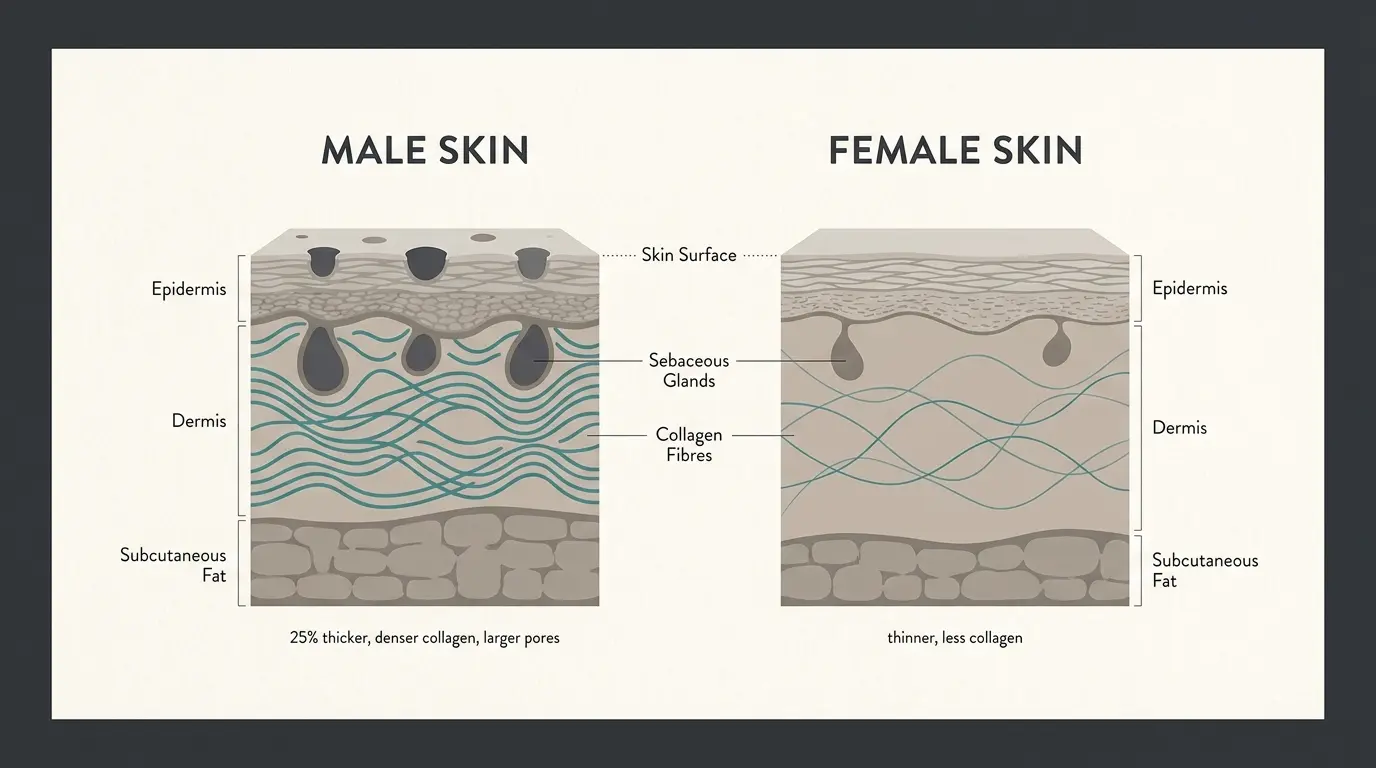
People love to argue that skin is skin. It is not. The differences are structural, hormonal, and measurable on high frequency ultrasound. Here is what really sets male skin apart.
It is thicker and tougher. That extra 20 to 25 percent of dermis is real armour, and it changes how deep a treatment has to reach to do anything at all.
It is oilier with bigger pores. Double the sebum means a shinier surface, more visible pores, and longer lasting breakouts well into adulthood.
It sits at a lower pH. A more acidic surface handles some actives differently and can flare faster when a routine is too aggressive.
Its collagen drops at a constant rate. No menopause cliff, but no menopause warning either. The decline is sneaky precisely because it is smooth, right up until the mid 40s burst.
It takes daily blade trauma. Shaving is low grade injury every single morning, which is why men get more redness, nicks, and ingrowns than they admit.
So does male skin need different treatments? Not a different planet. It needs recalibration. The same modalities that work beautifully on thinner skin often need to be dialled up, layered, and sequenced differently to truly penetrate that thicker, oilier canvas. Treat a man's face with a woman's settings and you get an expensive facial that feels nice and changes nothing.
What Men Actually Need, And What You Can Skip
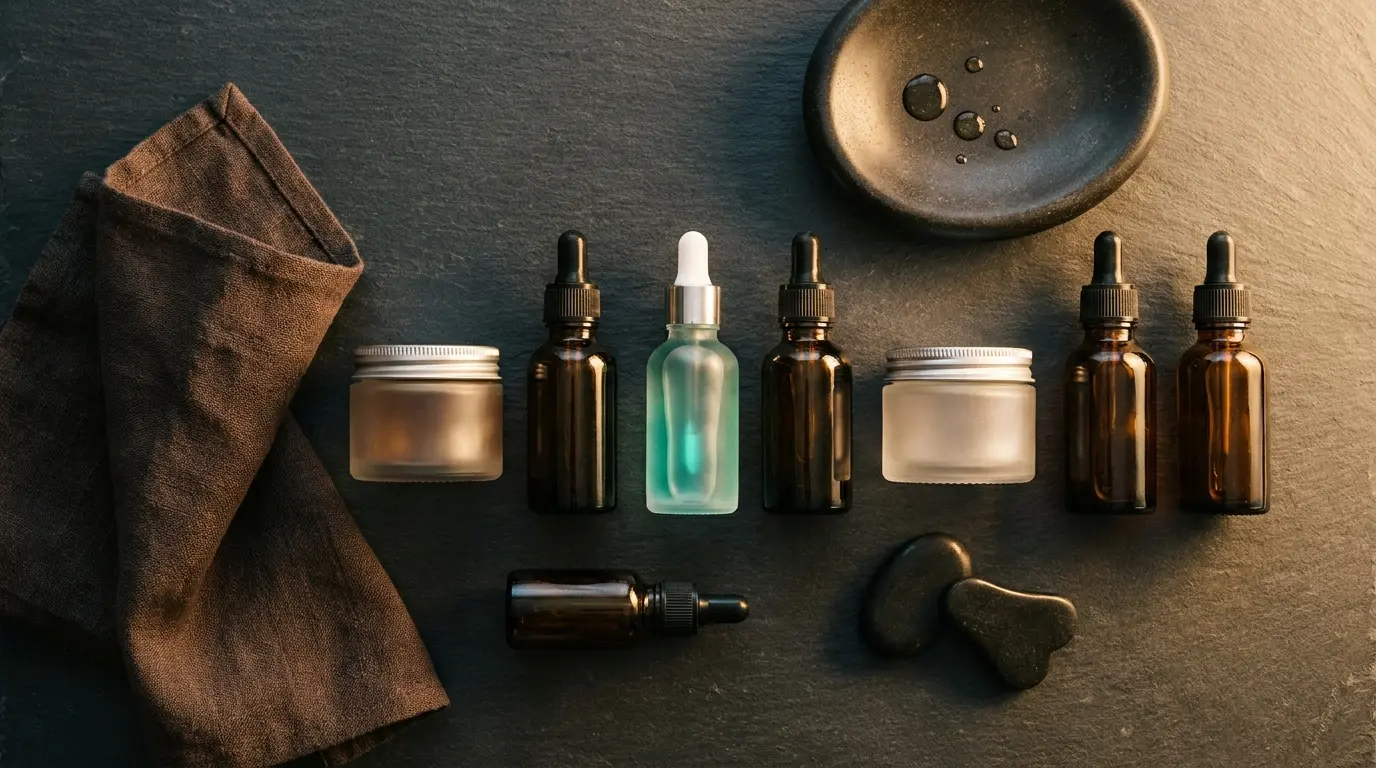
Most men either do nothing or panic buy a twelve step shelf they will abandon in three weeks. Both are wrong. The truth is that male skin responds fast when you hit the few things that matter and ignore the noise. Let us make it simple.
Keep these:
Real resurfacing. A controlled chemical peel or a gentle laser pass clears the dull, congested top layer that makes thick skin look grey and tired. We run the Aerolase Neo Elite for light based work, which suits darker stubble and oilier skin without aggressive downtime.
Collagen stimulation. This is the whole game for firmness. Peptides signal the skin to rebuild, while controlled micro injury triggers a real repair response in the dermis.
Smart hydration and barrier repair. Oily does not mean hydrated. A damaged barrier reads as that tight, ashy, post shave look. The right hydrators and barrier lipids fix it fast.
Pore and oil management. A monthly deep clean treatment keeps the larger male pore from looking like a crater under office lighting.
Daily SPF. The single highest return habit on this list. Boring, free of charge, and ruthlessly effective.
Skip these: the bathroom shelf of half used jars, fragrance heavy products that sting freshly shaved skin, viral gadgets with zero data behind them, and any plan that cannot tell you what changed and why. If a treatment is not tracked against your own progress photos, it is a guess.
Here is where the layered approach earns its reputation. Instead of one isolated treatment per visit, a strong men's program stacks several modalities in a single session that work on each other. Deep clean, then resurface, then stimulate collagen, then drive in actives while the channels are open, then calm everything with red light. That sequence is the honest answer to the question of who has the best facial for men in Vancouver. It is not one magic wand. It is the right things, in the right order, adjusted every visit as your skin changes.
Recalibrating The Needle, For Face And Scalp
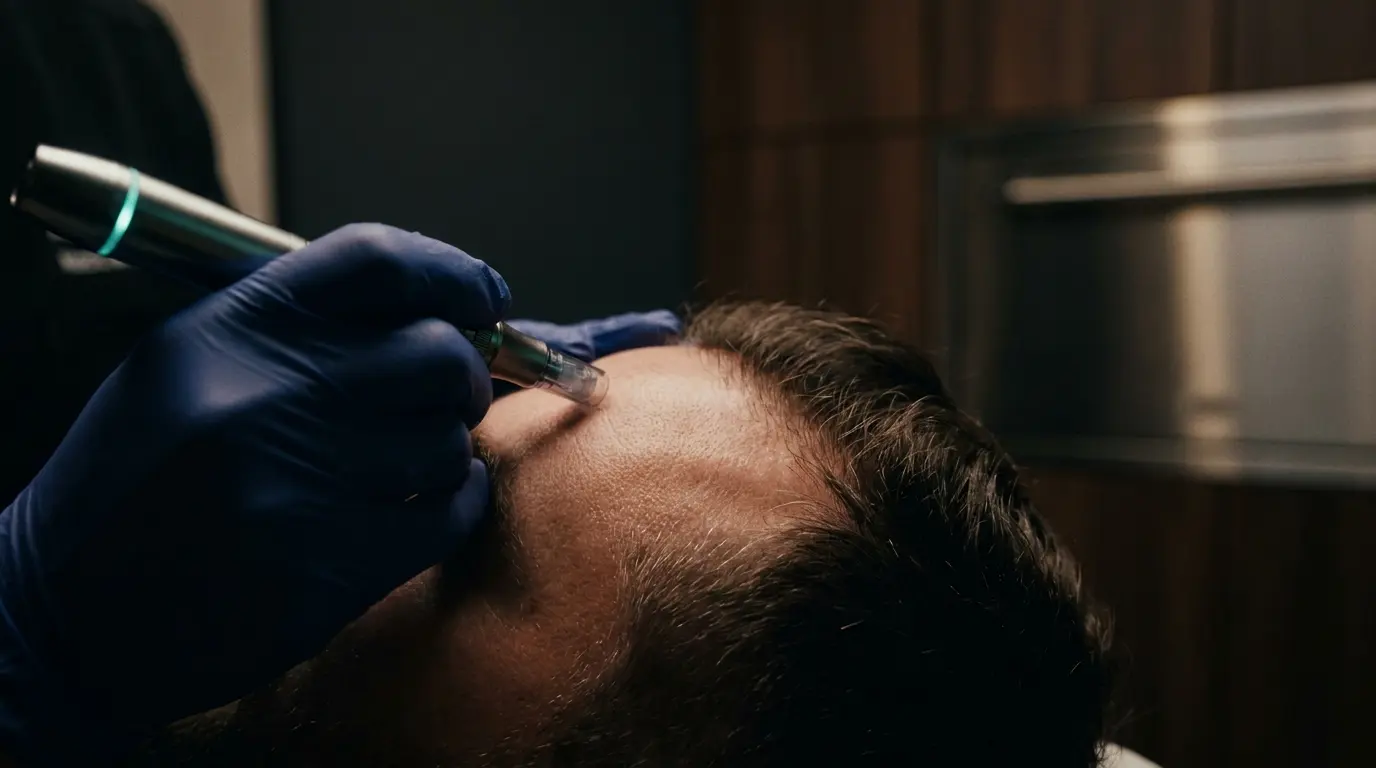
Now the part most clinics get lazy about. Microneedling is one of the best tools for male skin, but only if the operator respects how different that skin is. Thicker dermis means the standard depth and density that suits a thinner face often barely registers on a man. To even reach the collagen layer, the needle depth, the number of passes, and the pressure all have to be recalibrated upward. Same tool, completely different prescription.
On the face, that recalibration is what turns microneedling from a glorified glow facial into genuine remodelling of texture, pores, and old acne scarring. It gets even better when you pair the channels with regenerative signals. We layer in exosomes and PDRN, the cellular messengers that tell tired skin to behave young again, plus targeted growth factors for repair.
The scalp is where this gets exciting for men. That same controlled injury wakes up dormant follicles, and the data is hard to argue with. In a well known randomised trial, men who combined microneedling with a topical for hair loss gained an average of 91 new hairs per square centimetre over 12 weeks, versus just 22 for the topical alone. New growth also showed up around week 6 instead of week 10. So if your part is widening or the crown is thinning, recalibrated scalp microneedling paired with growth factors is one of the most evidence backed moves on the table. The catch is depth and protocol. A scalp needs a different setup than a cheek, and a man's scalp needs a different setup again.
Aging Into The Handsome Version Of You
Let me tell you about Marcus. Forty three, runs a sales team, the kind of guy who used to win a room before he opened his mouth. He came in convinced he just needed to sleep more. What he really said, two minutes in, was quieter. He felt like he was starting to look out of touch. Younger colleagues were getting the big pitches. He could not point to a wrinkle, but he could feel himself fading into the background, and it scared him more than he wanted to admit.
That fear is almost universal among men, and almost nobody says it out loud. The dread is not really about a line on your forehead. It is about walking into the meeting and having your face quietly suggest you have lost a step, before you have said a word. It is about staying in command of the room.
So here is the hopeful part, and it is a big one. Aging handsome is no longer luck of the draw. It is closer to biohacking than vanity. Track the right markers, intervene before the cliff instead of after, stack treatments that compound, and you can absolutely age into a sharper, more distinguished version of your own face. Not a frozen one. Not a stranger. Just you, rested and deliberate, the way the best aging men have always looked. Think Newman, think Clooney, men who got more handsome by directing the process instead of surrendering to it.
Marcus did the unglamorous version. A mapped program, built for men's skin, adjusted every few weeks against his own photos. Resurfacing for the dullness, collagen work for the slack jaw, a little scalp work for the part he kept checking in the mirror. Four months later he was not unrecognisable. He just looked like the version of himself that matched how capable he was. That is the whole point. The gap between letting it happen and steering it has never been wider. If you want to know where your own cliff sits and how far off it is, that is exactly what a proper consultation is for.
The Takeaway
So here is the short version. Men age slower, then drop fast, and the mid 40s burst is real and measurable. Male skin is meaningfully different, thicker, oilier, and more acidic, which means treatments must be recalibrated rather than copied from a woman's routine. The winners keep a tight stack of resurfacing, collagen stimulation, hydration, oil control, and daily SPF, and they skip the gimmicks. Microneedling, dialled up correctly, is a quiet powerhouse for both face and scalp. And aging into a sharper, handsome older man is now something you engineer, not something you hope for.
We hope this was worth your time. We spent days researching, fact checking, and condensing the most useful insights so you did not have to. If it helped, or if you know a guy who keeps blaming the elevator lighting, sharing it would mean a lot.