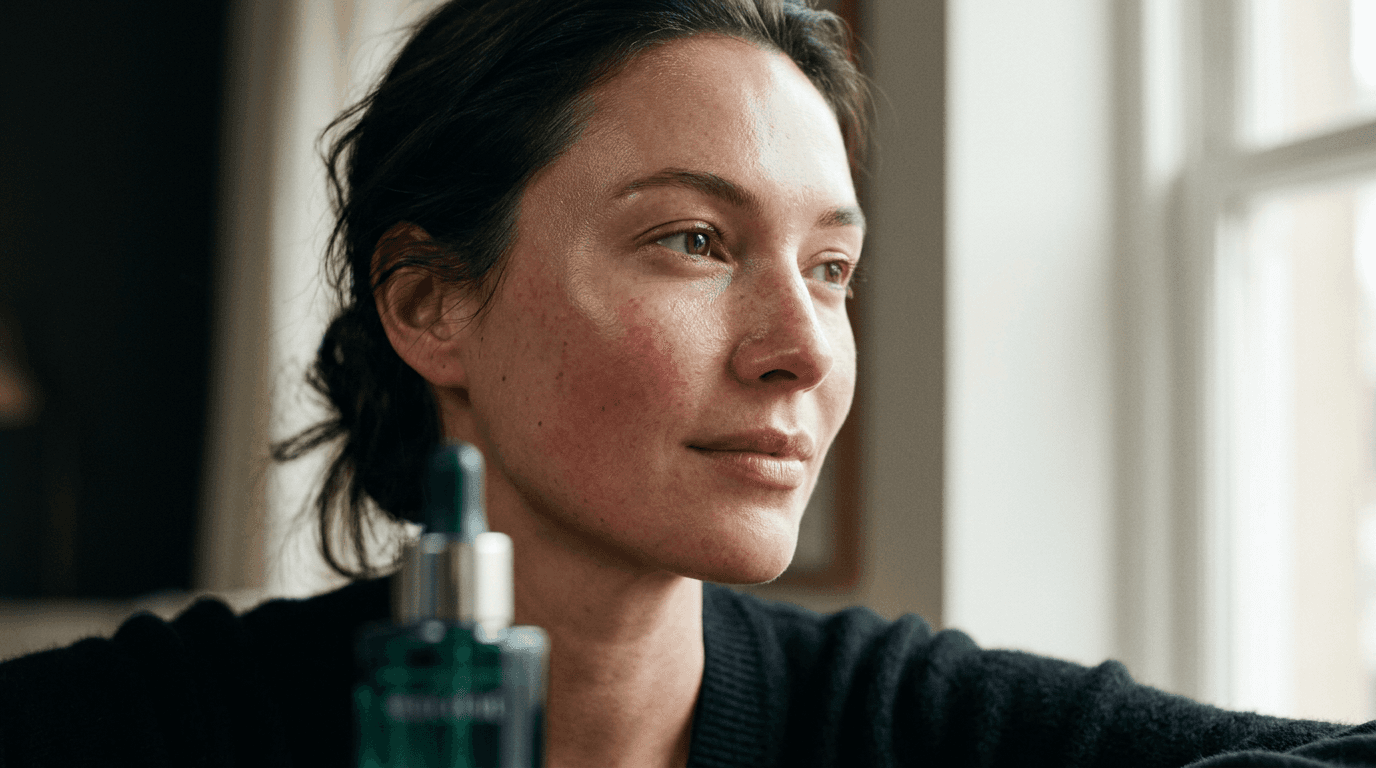
You did everything right. You cut the red wine. You skipped the hot yoga. You started treating sunscreen like a personality trait. And your cheeks are still lit up like you just sprinted for the bus.
Here is the part almost nobody tells you. Once redness sets in and stays, even on a calm Tuesday with zero triggers in sight, it usually is not about your habits anymore. Something structural has shifted under the surface.
We have spent years working with flushed, reactive, rosacea-prone skin in our Vancouver studio. This is the honest, plain-language breakdown we wish more people read first. What is really happening beneath that redness. Which in-clinic treatments earn their reputation. How Aerolase and IPL actually differ. Whether any of it is safe for deeper skin tones. And how many sessions before you recognise your own face again.
Grab a tea. This one is worth the eight minutes.
Why Your Face Stays Red
Let us start with the question that keeps people up at night. Why is the redness there when nothing set it off?
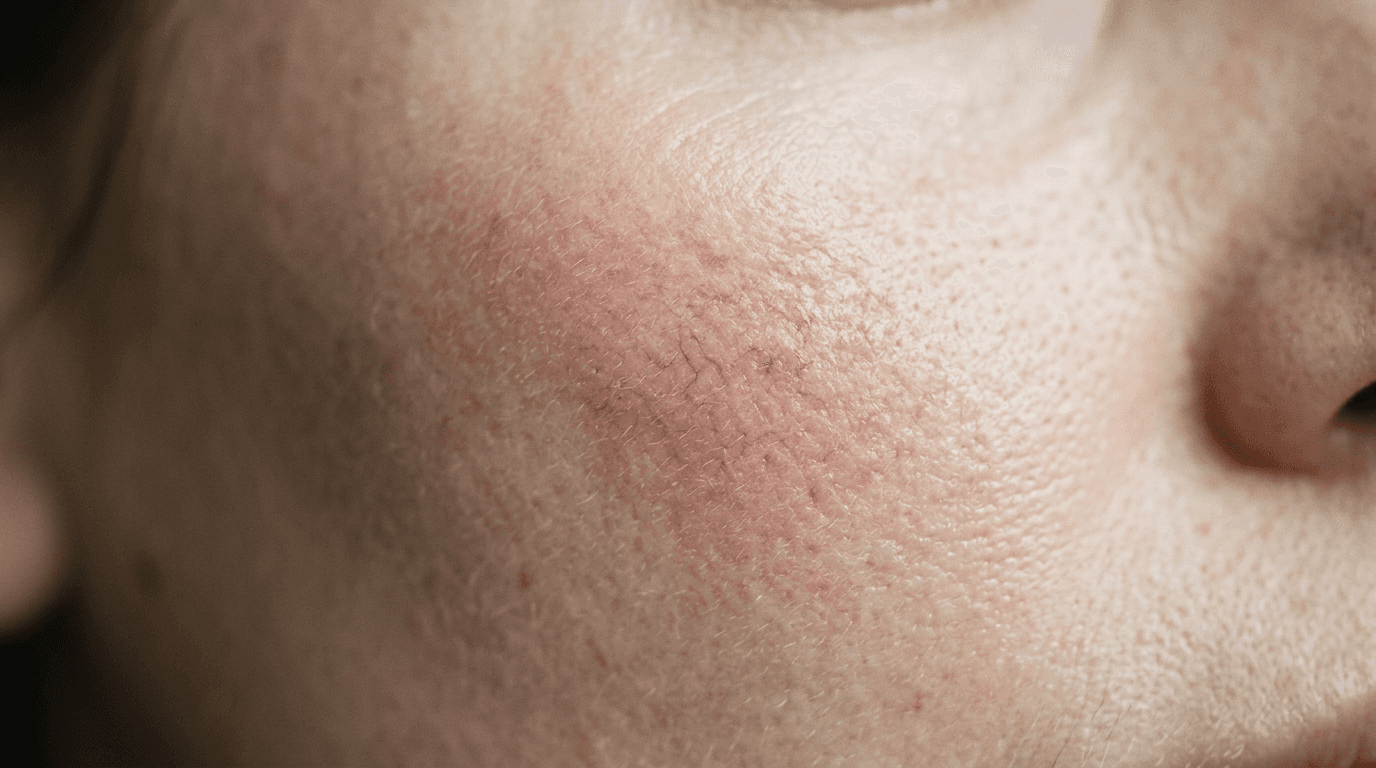
Think of the tiny blood vessels in your cheeks like elastic bands. In calm skin they widen when you blush or sweat, then snap right back. In rosacea-prone skin they get stretched so often that they stop snapping back. They stay open. They become visible. That is the quiet shift from "I flush sometimes" to "I am red all the time."
There is more going on than plumbing, though. Researchers now describe rosacea as a tag-team of an overactive immune response and a jumpy vascular system. Your skin's own defence peptides, including one called cathelicidin, go into overdrive. Mast cells gather right where nerves meet blood vessels. The result is a low-grade inflammation that simmers whether or not you ate the spicy noodles. The National Rosacea Society has a clear overview if you want to go a layer deeper. And you are far from alone in this. Rosacea affects more than 14 million people in the United States alone.
This is also why your antioxidant reserves matter. Reactive oxygen species pile up in inflamed skin and chip away at the dermal matrix, which keeps the whole cycle spinning.
The Flush That Forgot To Leave
Here is the strange thing about timing. Early rosacea often looks like nothing more than easy blushing. A glass of wine, a warm room, a moment of stress, and your face goes pink for ten minutes. Annoying, but it fades.
Give it months or years, though, and the pattern changes. The redness lingers for hours. Then days. Then it simply does not leave. The vessels that used to reset are now dilated more or less permanently, and fine red threads, called telangiectasia, start showing up across the cheeks and around the nose.
So when you stare in the mirror and think "but I did not do anything today," you are right. You did not. The biology did. You can read more about how we approach persistent facial redness in the redness file.
What Still Sets It Off
Even with that baseline redness, certain things pour fuel on the fire. Knowing your personal list is half the battle. The usual suspects:
Sun exposure, easily the most common amplifier
Heat, including hot showers, saunas, and that beloved space heater
Alcohol, especially red wine
Spicy food and very hot drinks
Stress and sudden emotion
Harsh, fragranced, or overly active skincare
Big temperature swings, like stepping from a Vancouver winter into a heated café
Where Skincare Hits Its Ceiling
Now, let us talk about your bathroom shelf. You have probably built a small fortune of serums aimed at calming your skin. Some of it is genuinely helping.
Good soothers can quiet the burning and the flushing. A proper wall of ceramides and barrier lipids reduces the stinging and the tightness, because a leaky barrier lets irritation in and water out. And if your skin feels parched and rough on top of being red, that is often a worn-down barrier making the redness look worse than it really is.
Here is the ceiling, though. Topicals work on the surface and on inflammation. They calm the room. What they cannot do is reach a blood vessel that has been dilated for three years and politely ask it to disappear. A cream cannot collapse a visible capillary. That is simply not in its job description.
So if you have been faithfully layering products and wondering why the background redness never truly budges, this is your answer. You have been treating the smoke. The in-clinic tools are what reach the fire.
In-Clinic Redness Treatments That Work
This is where things get genuinely exciting, because the technology that targets redness has come a long way.
The core idea is beautifully simple. Light and laser energy can be tuned to a colour that the haemoglobin in your blood drinks up. Aim that energy at a visible vessel, the blood heats, the vessel wall is damaged, and over the following weeks your body quietly clears the debris away. The redness fades because the thing causing it is gone, not just temporarily calmed. Our in-clinic laser work is built around exactly this principle.
IPL vs Aerolase, Plainly
This is the comparison everyone asks about, so let us make it clean.
IPL, or intense pulsed light, is broadband. Picture a flashlight that throws out many wavelengths at once. It can absolutely help with redness, but because it scatters energy across a wide range, some of that light gets soaked up by melanin, the pigment in your skin. On fair skin that is usually fine. On medium to deep skin tones, that melanin absorption raises the risk of burns and dark marks.
The Aerolase Neo Elite we run takes a different route. It is a single 1064 nanometre wavelength, one that travels deeper and is far less interested in melanin. It delivers energy in incredibly short bursts, around 650 microseconds, which lets it heat the target vessel without dragging the surrounding skin along for the ride. No gels. No chunky cold tips pressed hard against inflamed skin. For a face that is already touchy, that hands-off, gentler delivery is not a small detail. It is the whole point.
The short version. IPL is a floodlight. This kind of laser is a precision beam. One of those is the smarter choice for reactive, redness-prone skin.

Does It Work On Broken Capillaries?
Short answer. Yes, and the data is reassuring.
In one published study, a 1064 nanometre laser cleared facial telangiectasia by 95 to 100 percent after treatment, and patients tolerated it well. In rosacea specifically, courses of long-pulsed 1064 treatment have shown average redness improvements in the range of 28 to 57 percent, with many people landing above the halfway mark. And a meta-analysis weighing this approach against the older pulsed-dye laser found the two deliver similar clinical results, which is high praise given how long pulsed-dye has been the reference standard.
Numbers are nice. A face is better. Which brings us to Maya.
Maya, a 38-year-old who came in from Kitsilano, had spent a decade certain she just had "sensitive skin." Every winter her cheeks looked windburned. Every summer they looked sunburned. She owned a drawer of half-used calming creams and a quiet habit of choosing tops by whether the collar pulled attention away from her face. We mapped the fine vessels across her cheeks, built a layered plan, and started treating. By her third session she texted us a photo from a patio. Bare-faced, squinting into the sun, grinning. The caption was four words. "I forgot my makeup." She had not forgotten. She just did not need the mask anymore.
Is Laser Safe For Darker Skin?
This one deserves its own section, because the honest answer used to be "be very careful," and for some devices it still is.
Here is what changed. That deeper-reaching 1064 nanometre wavelength is naturally far less absorbed by melanin, which is precisely what makes it the safer choice for medium and deep skin. In a study using the same family of laser we run, patients across Fitzpatrick types four through six, the richer end of the skin tone spectrum, saw their rosacea redness and visible vessels improve with no lasting pigment problems.
That matters enormously. People with deeper skin are too often told that laser and redness work simply is not for them, then left to manage stubborn dark marks on their own as well. The right wavelength, in trained hands, rewrites that conversation. Safety here is not about luck. It is about physics and the right settings.
How Many Sessions, And Does It Last?
Let us set expectations like adults, because this is where disappointment usually sneaks in. Not from the treatment. From the mismatched expectation.
A Realistic Session Timeline
Most people need a short series, commonly three to five sessions, rather than one dramatic appointment.
Sessions are usually spaced a few weeks apart, giving your skin time to clear treated vessels and recover.
Diffuse background redness tends to soften gradually across the course. Individual broken capillaries can vanish faster, sometimes after one or two visits.
You may look a little flushed for a few hours afterward. That tends to settle by the same evening.
Once you reach your calm baseline, occasional maintenance keeps you there.
Managed, Not Magic
Now the honest part. Rosacea is a chronic condition, not a one-time problem you delete. The vessels we treat are gone for good, but the underlying tendency to form new ones stays with you. That is not a catch. That is just biology being biology.
So the realistic goal is not "cured forever." It is "controlled, calm, and easy to keep that way." Most people reach a point where daily redness is a non-issue, and a light touch-up once or twice a year holds the line. Think of it like the dentist. You do not stop going because the work failed. You go because it keeps working.
How We Layer For Lasting Calm
Here is what truly separates a serious plan from a one-off zap. Redness is rarely a single problem, so we rarely treat it with a single tool.
In one calm sequence we might combine targeted laser to address the vessels, LED light to settle the inflammation underneath, gentle cryotherapy to ease puffiness and flush out the day. We then protect the barrier between appointments with collagen-friendly peptides and deep hydrators, so the calm holds at home and not just in the chair.
The layering is the entire point. Each modality covers a different angle, and together they do what no single treatment can.
Laser to clear the visible vessels
Light and soothers to quiet the inflammation
Drainage and circulation support to reduce flushing
Regenerative messengers and barrier care to make it last
And because your skin keeps changing, your plan changes with it. We track progress session by session and adjust as you go, rather than running the same recipe on repeat. If you want to see what a calm-skin plan would look like for your face specifically, a quiet consult is the easiest place to start.
The Calm Is Closer Than You Think
Let us bring it home. Persistent redness that ignores your best behaviour is not a willpower problem, and it is not in your head. It is dilated vessels and a reactive immune response. Both respond beautifully to the right in-clinic tools once topicals have done all they can. The wavelength matters. The layering matters. And a realistic three-to-five session arc with light maintenance is usually all it takes to retire the green-tinted primer for good.
We hope this gave you the clear, no-spin picture you came looking for. We spent days researching, fact-checking, and condensing the parts that actually matter, so you did not have to. If it helped, passing it along to the friend who keeps blaming their blush on the weather would mean the world.
Your calmest skin is not a fantasy. It is a plan.